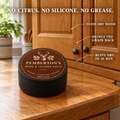
Wood and leather behave the same way. Both are natural materials that hold their own oils, and both have a thin top layer: the clear finish on your table, the grain side of the hide on your sofa. That layer is what you actually see.
While the oils underneath are still there, you never think about either one:
- Spills bead up and wipe away
- The grain looks warm and the leather feels soft
- The sofa arm flexes instead of cracking
Over the years those oils dry out, and most of what goes on top makes it worse: silicone spray on the wood, wipes and thick creams on the leather.
- The wood's own oils dry up underneath and it goes grey
- Silicone sits on top and traps the haze in
- Leather loses its fats and splits where you touch it most
- Refinishers turn away tables sprayed for years ("fisheye")
Nothing gets fed, everything gets covered. The sprays and wipes sold to protect furniture are a big part of why it looks worse every year.
And it builds, year after year.
That haze on the tabletop isn't a stain in the wood. It's fog under glass, like a bathroom mirror after a shower, except this glass has been sealed shut with silicone.
The cracks on the sofa arm are the same story. The leather isn't worn out. It's gone years without the oils it started with, and the wipes only shined the surface.
The mayo, the iron, the spray polish, the leather wipes? Right idea, wrong tool.
- That's why the haze came back by the next weekend
- That's why the sofa arm went stiff a week after the wipes
- That's why the grain keeps getting greyer
- That's why the refinisher said no
Your table is under cling wrap, and your sofa is running on empty.
The longer it goes, the more permanent it feels. More haze, more grey, more cracks. Another holiday with the runner on the table and the throw over the arm.


 +